牛马
- Literally
- Oxen and horses; beasts of burden.
- Meaning
- Self-mocking slang for overworked, underpaid employees who feel like beasts of burden.
- Popular since
- 2024
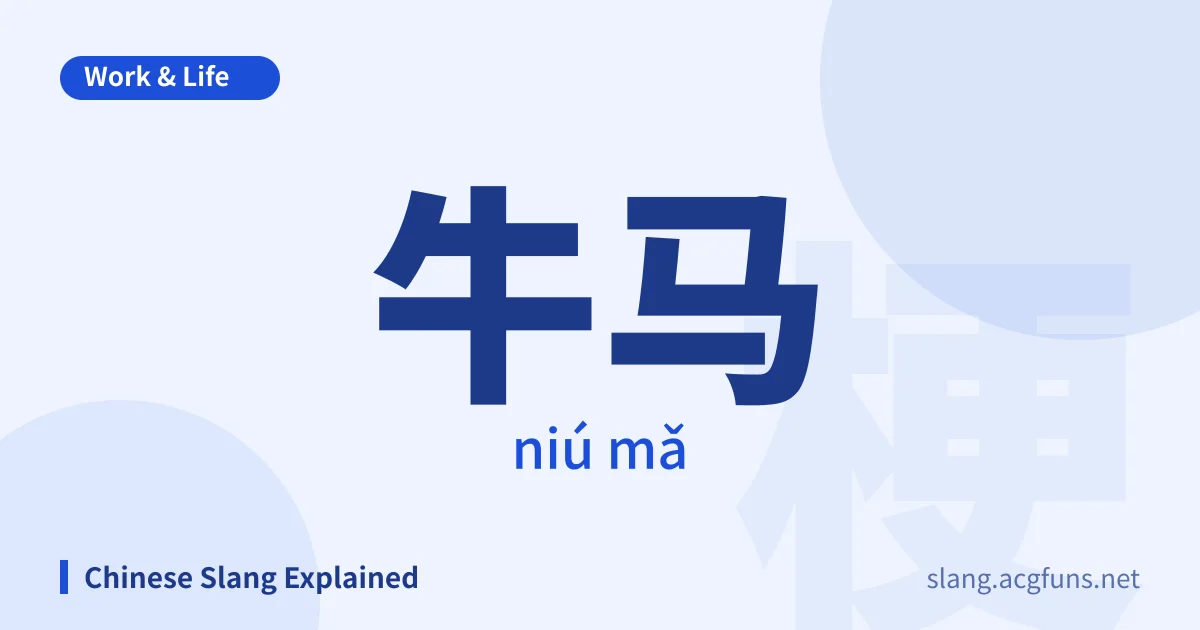
What does 牛马 mean?
牛马 is what Chinese office workers call themselves when the job starts to feel like draft work: long hours, low pay and no control over their own calendar. Variants include 城市牛马 ('urban beasts of burden') and 牛马人. The comparison with 打工人 is worth drawing precisely, because the two are not interchangeable. 打工人 can still sound like a badge, something you say with your chest out; 牛马 is what you say once the badge has stopped being funny. It's self-directed by default, and aimed at somebody else it lands as an insult.
Where does 牛马 come from?
Calling people stuck in hard, thankless labor 牛马 is nothing new in Chinese; what changed was who was applying it to themselves. As office-worker self-mockery it grew from around 2023 and peaked in 2024. Some sources credit a Bilibili creator who documented punishing construction-site work with helping it spread, but the rise was gradual and has no single clear origin.
How to use 牛马
- 周一了,牛马又要上工了。
Zhōuyī le, niú mǎ yòu yào shàng gōng le.
It's Monday — time for us workhorses to clock in again. - 我们都是公司的牛马,谁也别笑谁。
Wǒmen dōu shì gōngsī de niú mǎ, shéi yě bié xiào shéi.
We're all just the company's beasts of burden, so nobody gets to laugh at anyone.
Also available in: 日本語 · 한국어 · Español
Comments
Have you run into this word in the wild? Share where you saw it, who said it, and what happened.