累觉不爱
- Literally
- tired feel no love
- Meaning
- “Too tired to love anymore” — a weary sigh after being worn down or let down.
- Popular since
- 2013
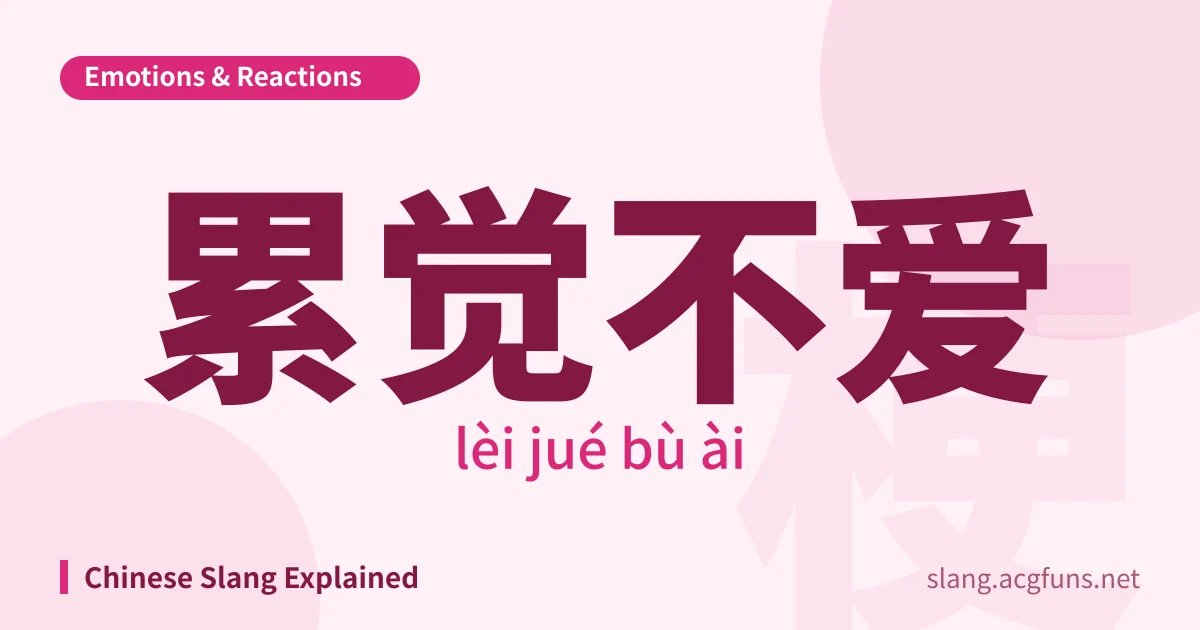
What does 累觉不爱 mean?
累觉不爱 stands for 累了,感觉不会再爱了: I am tired; I feel I can no longer love. It is the sound of an exhausted shrug after overtime, a botched finale, or a week of bad news. It began as a lament about romance and quickly widened into a general idiom of fatigue. The tone is deliberately melodramatic: you were not merely disappointed, you were drained to the point where affection itself stopped.
Where does 累觉不爱 come from?
The phrase traveled across Weibo and Tieba during 2013 and was sorted into the year's shorthand pile by year-end roundups on People's Daily's site (2013-12-09) and China News Service (2013-12-17). Most of its fellow acronyms vanished; this one drifted into everyday speech. Where earlier cries like 伤不起 wallowed in grievance, 累觉不爱 is quieter: resignation with the plug pulled.
How to use 累觉不爱
- 加班到凌晨三点,她发了条朋友圈:累觉不爱。
Jiābān dào língchén sān diǎn, tā fā le tiáo péngyǒu quān: lèi jué bù ài.
She worked until 3 a.m. and posted a single line on her feed: too tired to love anymore. - 追了三个月的剧大结局烂尾,真是累觉不爱。
Zhuī le sān gè yuè de jù dà jiéjú làn wěi, zhēn shì lèi jué bù ài.
Three months of watching and the finale fell apart. So tired, so done with love.
Also available in: 日本語 · 한국어 · Español
Comments
Have you run into this word in the wild? Share where you saw it, who said it, and what happened.