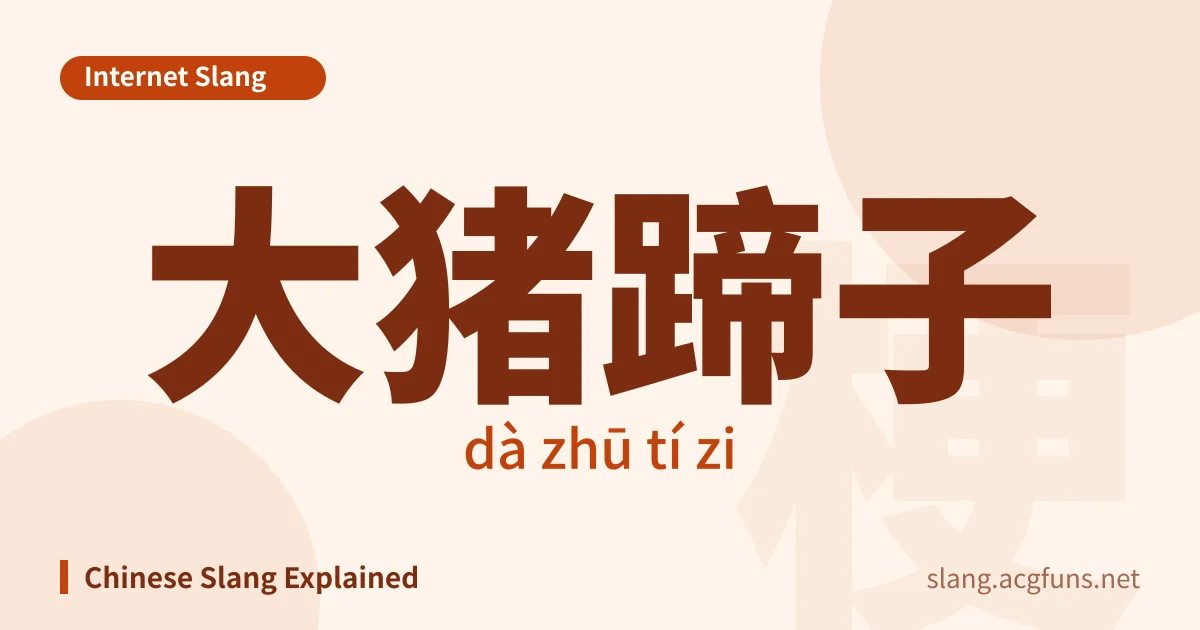
大猪蹄子
- Literally
- “Big pig trotter.”
- Meaning
- A mock insult for men who are fickle, insensitive or quick to change their minds.
- Popular since
- 2018
👁 0 views
What does 大猪蹄子 mean?
大猪蹄子 is what you call a boyfriend or husband when he says one thing and does another: forgets the anniversary, criticizes your new haircut, or takes the wrong side. It sounds harsher than it is; the tone is exasperated affection rather than genuine anger. Women also use it about men in general: 男人都是大猪蹄子, “men are all pig trotters”.
Where does 大猪蹄子 come from?
The insult spread in the summer of 2018 alongside the palace drama 《延禧攻略》. Each time the emperor 乾隆 changed his affections on screen, viewers buried him in 大猪蹄子 comments, and by August the phrase was everywhere on Weibo. The word had circulated in smaller circles before; the drama lit the fuse.
How to use 大猪蹄子
- 说好陪我逛街,结果自己打游戏到半夜,大猪蹄子。
Shuō hǎo péi wǒ guàngjiē, jiéguǒ zìjǐ dǎ yóuxì dào bànyè, dà zhū tízi.
He promised to go shopping with me, then gamed until midnight. Big pig trotter. - 闺蜜群今晚的主题又是批斗男人,结论照旧:都是大猪蹄子。
Guīmì qún jīnwǎn de zhǔtí yòu shì pīdòu nánrén, jiélùn zhàojù: dōu shì dà zhū tízi.
Tonight's group chat was once again a tribunal about men, and the verdict was the usual: all pig trotters.
Also available in: 日本語 · 한국어 · Español
Comments
Have you run into this word in the wild? Share where you saw it, who said it, and what happened.